
Loading, please wait...
.webp&w=384&q=75)
Loading, please wait...
"Wherever the art of Medicine is loved, there is also a love of Humanity."
— Hippocrates

Did you know that India needs 130,000 trained emergency physicians today to bridge the wide gap in access to emergency care? In an attempt to cater to this need, Omnicuris Academy brings to you a triple-accredited Certification Course on Emergency Medicine straight from the Royal Colleges of Physicians at your fingertips. The course is structured around critical medical & surgical emergencies. Enroll now & become a certified EM professional!
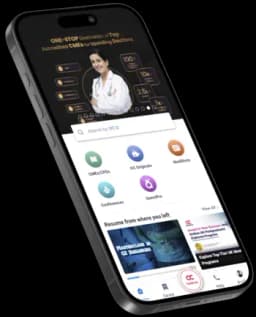
Link will be sent via SMS to your number.



Did you know that India needs 130,000 trained emergency physicians today to bridge the wide gap in access to emergency care? In an attempt to cater to this need, Omnicuris Academy brings to you a triple-accredited Certification Course on Emergency Medicine straight from the Royal Colleges of Physicians at your fingertips. The course is structured around critical medical & surgical emergencies. Enroll now & become a certified EM professional!
3 years back

With a workforce shortage of around 130,000 Emergency Medicine Physicians in India, the need to address this growing requirement in the frontline care is on topmost priority. Omnicuris Academy brings to the select few, a highly coveted Certification Course in Emergency Medicine from the prestigious Royal College of Physicians, on Medical and Surgical Emergencies. Enroll now to realize your dream of becoming an Emergency Medicine Specialist!
3 years back

The importance of the cardiac arrest survival score (CRASS) in predicting the likelihood of good neurological outcomes following Out-of-Hospital Cardiac Arrest (OHCA) has been verified. Only 260 patients out of 11,404 had an adequate neurological function. CRASS frequently overestimated the projected likelihood of favorable outcomes. In predicting favorable neurological outcomes, CRASS exhibited strong discrimination and modest calibration.
4 months ago

This systematic review of 17 studies (n= 1,209) evaluated the prognostic role of urinary neutrophil gelatinase-associated lipocalin (uNGAL) in pediatric patients with type 1 diabetes (T1D). uNGAL levels were significantly higher in diabetes patients than in healthy controls and showed a moderate correlation with albumin-to-creatinine ratio. With high diagnostic accuracy, uNGAL may serve as an early biomarker for diabetic kidney disease (DKD).
last year